



What Is Self-Myofascial Release? Fascia, Therapy Balls & Mobility
Why Self-Myofascial Release Feels So Good (and Why Your Body Might Need It)
I love offering self-myofascial release to my students! This modality is excellent for yogis, couch potatoes, and everyone in between. It’s especially beneficial for people who spend long hours sitting, carrying stress, or feeling stiff and disconnected in their bodies. Self-myofascial release helps to relieve tension created by repetitive movement or the stresses of modern life.
What is Self-Myofascial Release?
Self-myofascial release is the targeted use of movement and therapy balls to reduce pain, improve posture, and relieve tension — even chronic tension — from the body.
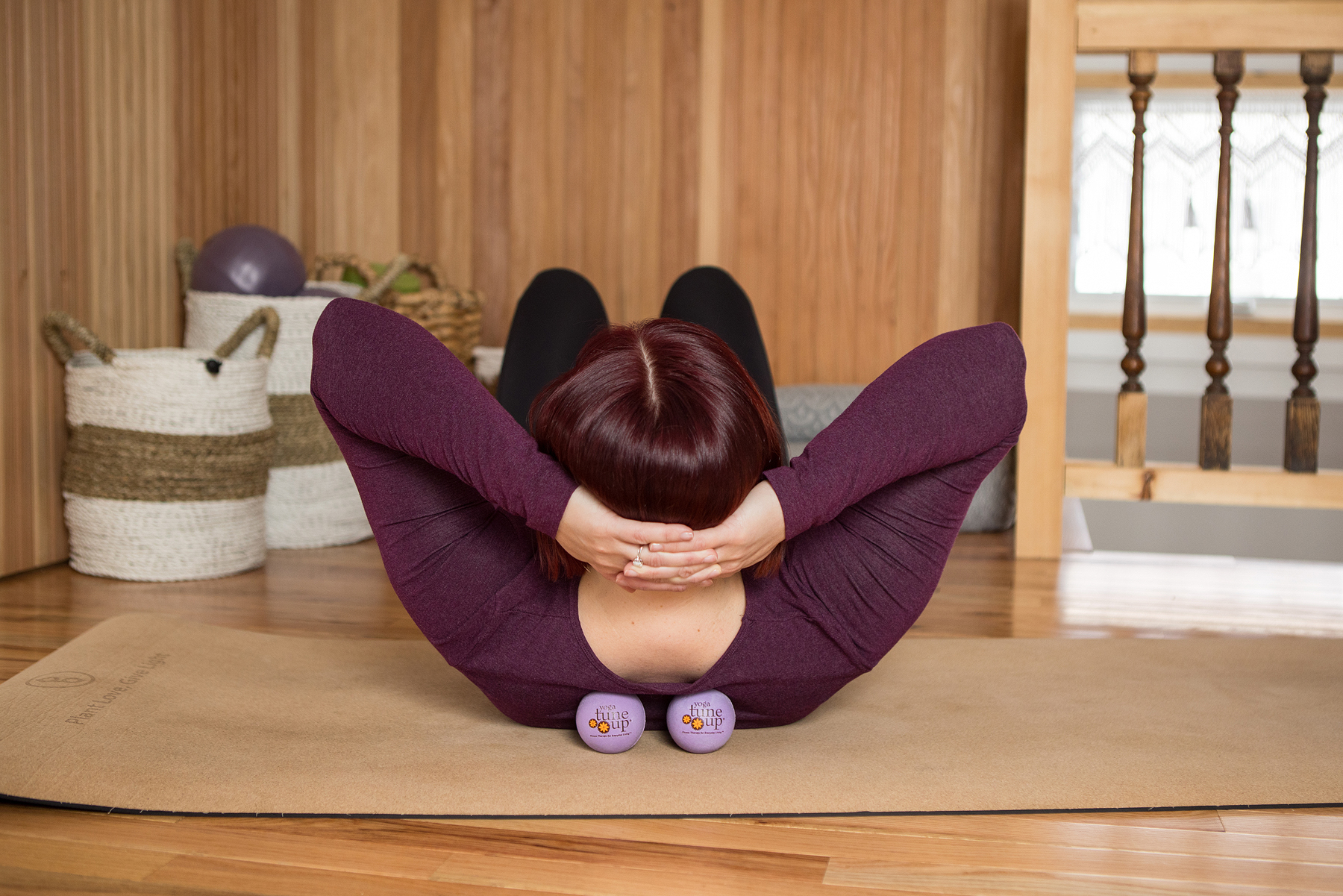
It works with your body’s connective tissue, known as fascia. We encourage self-myofascial release using massage therapy balls. These specialized tools were designed to encourage your body to relax and release held tension.
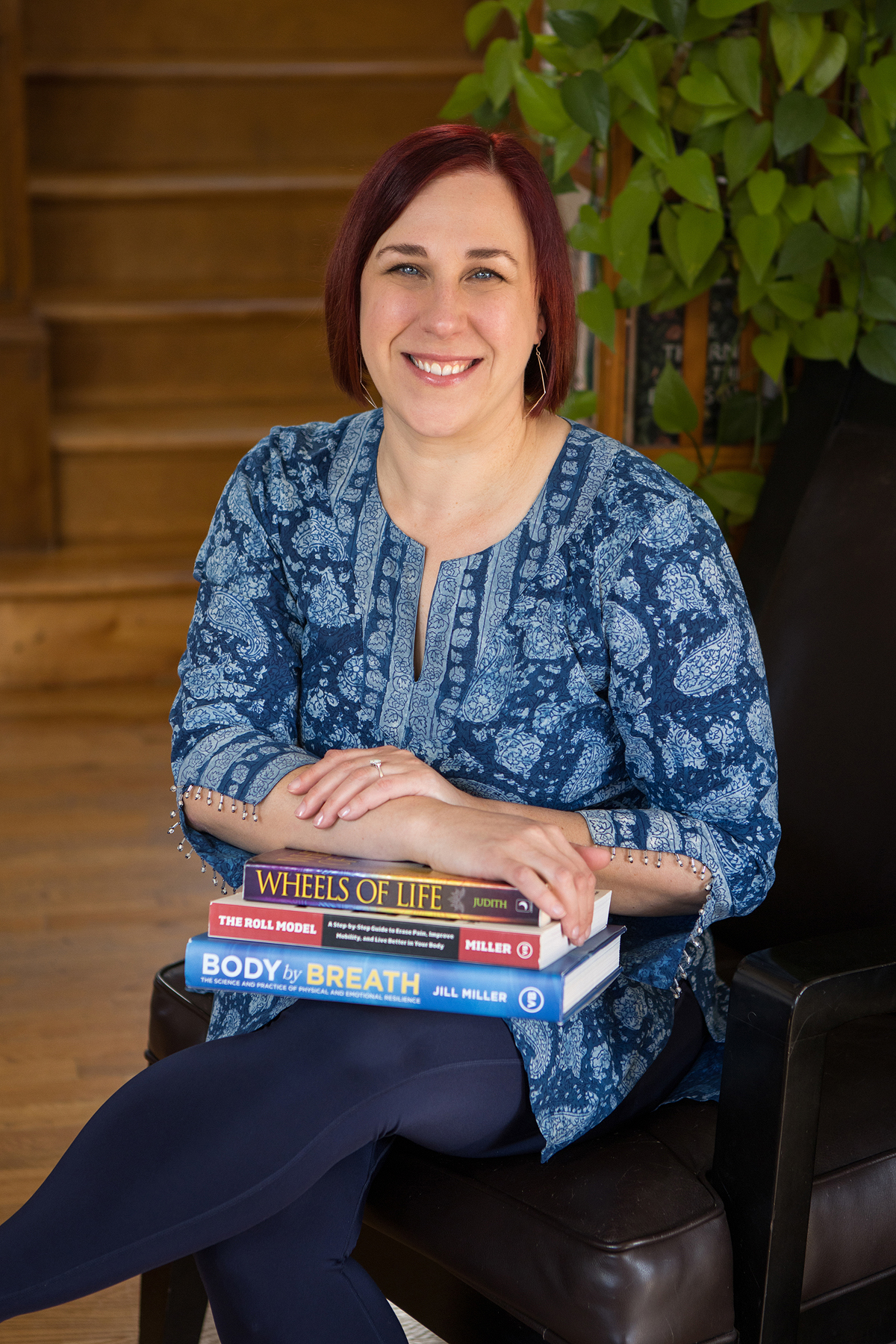
Many of the rolling and self-myofascial release techniques I use were popularized through Yoga Tune Up® and The Roll Model® Method developed by Jill Miller, C-IAYT, ERYT. And I’ve had the opportunity to learn from her personally, deepening my understanding of the tools and techniques.
I use myofascial release in my yoga classes to target specific body areas, combining corrective movement, yoga postures, deep stretching, and self-massage techniques. These classes are designed to stretch, strengthen, and care for your body from head to toe.
What is Fascia?
Fascia is the connective tissue surrounding and running through your muscles. This tissue becomes denser at the ends of the muscles, becoming the tendons that connect muscle to bone. Like stretching, myofascial release helps soften and lengthen the fascia and your muscles.
This deep-tissue release helps to:
Relieve tension held in the muscles and connective tissue
Encourage healthier movement and hydration in the connective tissue
Support healthier movement patterns in connective tissue affected by injury, repetitive movement, or scarring.
Increase flexibility and range of motion in your joints
Make your movement practice or daily life feel better and more comfortable
When your fascia is well-hydrated and malleable, it creates more glide between your muscles and the surrounding tissue. Think about rubbing two pieces of sandpaper together versus two pieces of regular printer paper. Your fascia can move freely or feel stuck against the other tissues around it.
Your fascia can become damaged through injury, misuse, or overuse, such as repetitive motion (like scrolling on your phone). The therapy balls are soft enough to massage deep into the joints safely, helping improve connective tissue health.
Rolling with the therapy balls helps hydrate your fascia and keeps it moving smoothly within your body. Better glide of the fascia also shows up as an increased range of motion in your joints. This means you can stretch further, move better, and overall feel better in your body.
What to Expect From a Class or Workshop Incorporating Self-Myofascial Release
As with any yoga class, you will arrive dressed in breathable clothing and ready to move. Bring your yoga mat or borrow one; most yoga studios supply mats for you to use.
We’ll start class with gentle stretching and warm-up yoga poses, such as Cat/Cow, to prepare the body for deeper movement and stretching. Then, it’s time to get rolling! After exploring a “check-in pose” to see how you are feeling in your body, we’ll start to use the therapy balls to massage sore, tired, or tight muscles.
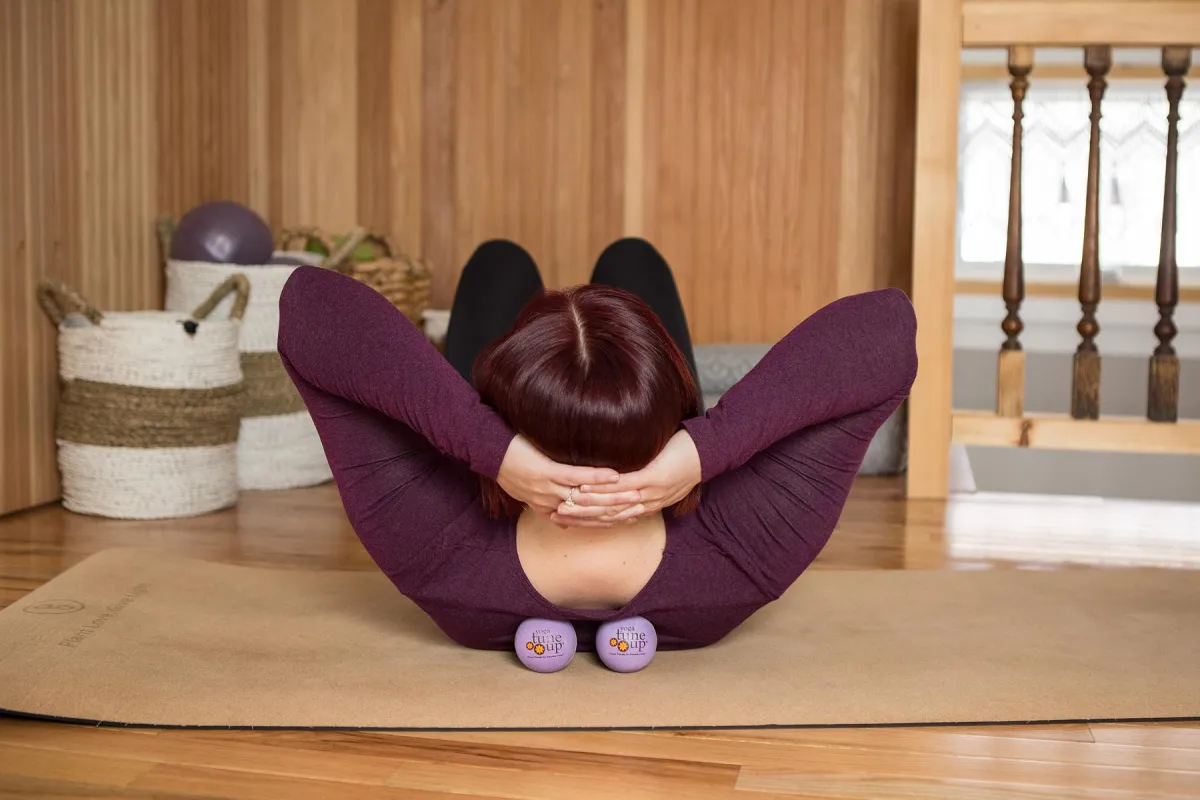
There are a variety of techniques used with the therapy balls in order to get deep into the muscle tissue for myofascial release. You'll be guided in these techniques, including rolling, compression, and cross-fiber muscle massage. After rolling a specific area, we’ll return to our check-in pose to see how we feel after the self-massage.
Some of the postures we do in a typical class or workshop are similar to yoga postures you may recognize, and some may be entirely new to you! All the movement and stretching we’ll explore were designed to target specific muscles or muscle groups, helping you identify “blind spots” in the body.
Just as we do in a yoga class, we end with Savasana (Corpse Pose). This pose looks like just lying on the ground. However, there’s more going on under the surface.
By taking a few minutes to rest and quiet the body and mind, we signal to our nervous system that the work is done and that we can begin the recovery process.
Common Areas Where People Hold Tension
Your body holds onto tension from emotional or physical stress. By moving, stretching, and rolling, we can begin to release tension in the body.
Here are some common places people hold onto tension:
Hips
Glutes
Neck & Jaw
Feet
Lower back
Luckily, these are all places that are accessible with the massage therapy balls. These balls were created in different sizes to access the larger muscles and smaller joints of the body.
How to Get Started
If this is something you think you would benefit from (and nearly everybody can!), there are a few ways you can get started. All of these options combine therapy ball release, deep stretching, and rest to support mobility, stress relief, and nervous system recovery.
I offer weekly Roll & Release classes, both in-person in the Twin Cities metro area and online. These classes work through a series of body parts, adding mobility from the ground up. We start with the feet and work our way up to the neck and jaw.
I also offer regular workshops that bring these techniques into longer experiences, providing a deeper understanding of anatomy and functional movement.
I bring this work forward in my other offerings as well. You can guide yourself through a tour of your body using the video library, or get tailored and targeted one-on-one support through private yoga with me.
One Last Note: Choose Your Tools Wisely
There are many tools out there for myofascial release, and more are being developed every day. However, not all of them can be used the same way as the massage therapy balls developed by Tune Up Fitness.
The research and care that went into their development ensure they are safe and effective tools for reducing tension while minimizing your risk of inflammation and injury. They can be purchased from the Nourish & Grow Yoga Shop for at-home use. I offer free pickup or delivery in the Twin Cities.
Still curious? Here are a few common questions I hear about self-myofascial release, fascia, and MyoYin.
Frequently Asked Questions
What is fascia?
Fascia is the connective tissue surrounding and running through your muscles. This tissue becomes denser at the ends of the muscles, becoming the tendons that connect muscle to bone.
What is self-myofascial release?
Self-myofascial release is the targeted use of movement and therapy balls to relieve pain, improve posture, and reduce tension in the body.
Is myofascial release supposed to hurt?
While myofascial release can be uncomfortable, it shouldn’t hurt hurt. The intensity can be comparable to a deep-tissue massage. And because you control the pressure, it can be as gentle or deep as you want it to be.
What are therapy balls used for?
Yes. Online yoga classes, especially livestream classes, offer guidance, structure, and accountability while allowing you to practice from home.
What’s the difference between foam rolling and therapy balls?
Foam rolling uses a cylindrical roller to massage the body, whereas therapy balls are, well, round balls in varying sizes that can get deeper into the tissues for greater relief. Therapy balls can also access smaller or harder-to-reach areas, such as the feet, jaw, and shoulders.
Is Roll & Release beginner-friendly?
Yes, it’s beginner-friendly. One of the tenets of Roll & Release and self-myofascial release, as I teach it, is to listen to your body. Throughout classes, I offer variations on stretches, postures, and rolling techniques to make them suitable for as many different bodies as possible.
How often should you practice self-myofascial release?
Depending on your level of tension, you can practice self-myofascial release multiple times a week. However, rather than rolling the same spot over and over, I recommend spreading out to neighboring joints and muscles. After all, you have a whole body to explore!
Can self-myofascial release help with stress and tension?
Yes, self-myofascial release helps with stress and tension. The tension held in your body has both a physical and emotional component. The techniques for presence and embodiment, as well as stretching and rolling, can have a profound effect on reducing stress and tension.
About the Author
Ashley Vasas is a Minneapolis-based yoga teacher and the founder of Nourish & Grow Yoga. She has taught more than 1,000 hours of yoga classes, workshops, and special events and holds both 200-hour and 500-hour yoga certifications. Ashley specializes in accessible, nervous-system-supportive yoga that helps students build strength, mobility, and sustainable self-care practices.
She teaches online yoga classes as well as in-person classes in the Twin Cities.




