



Yoga for Stress & Anxiety: 5 Calming Poses for Your Nervous System
Yoga for Stress & Anxiety: 5 Poses to Calm Your Nervous System

Stress can arise for any of us. Sometimes that stress is a small annoyance, like bad traffic on your way to work when you’re already late (why is the commute always awful when you’re already behind?). Other times, it can be greater, such as the burden of caregiving for aging parents, young children, or both. Stress can be sudden and intense or long, drawn out, and draining.
No matter what form it takes, the effects of stress live in your body. And when you’re not dealing with it, it’s easy to feel tired, irritable, anxious, distracted, or just not like yourself.
The good news? Yoga can help.
The Impact of Yoga on Your Nervous System
Yoga can reduce stress and anxiety by promoting deep relaxation and time for reflection in each pose. It can help you foster a stronger mind-body connection and can improve your sleep quality.
Yoga also works with the body to increase your flexibility and range of motion and improve your balance and posture. Supported postures, especially those on a gentle incline, can soothe the nervous system, lower your blood pressure, and help to reduce chronic pain.
5 Yoga Poses for Stress & Anxiety
I’ve put together a short list of five yoga postures that are excellent for fostering a sense of calm and reducing anxiety. Each of these postures is beginner-friendly and can be done with or without props.
Quick List: 5 Calming Yoga Poses
Child’s Pose (Balasana)
Thread the Needle
Supported Bridge (Setu Bandhasana)
Legs Up the Wall (Viparita Karani)
Savasana
Child's Pose (Balasana)

Starting from Tabletop, open your knees wide on the mat, then bring your big toes together to touch. Walk your hands out in front of you, folding forward until you can bring the center of your forehead to the mat. Relax your hips, and release your belly between your thighs. Bring your awareness to your breath and hold this posture for 8 breaths or up to several minutes.
Modifications with Props:
You can use a block under your forehead to reduce stress on your neck or back.
Place a blanket underneath your knees to reduce pressure, or roll up a blanket and place it behind your knee joint.
If folding forward is a challenge, rest on your forearms instead.
Thread the Needle (Urdhva Mukha Pasasana)

Starting from Tabletop, reach your right hand up and back, lifting it up toward the ceiling to open your chest. Then, bring it down in front of you and between your torso and your left arm. Rest your head on the mat and bring your right shoulder to the mat as well. Option to press your left hand into the mat for a deeper twist, or you can reach your left hand toward the top of your mat. Hold this posture for 8 breaths or up to a couple of minutes. Repeat on the other side.
Modifications with Props:
You can use a block under your head to reduce the angle of your torso as you lean toward the mat.
Place a blanket underneath your knees to add cushion and reduce pressure.
Supported Bridge (Setu Bandhasana)

From lying on your back, bring your heels in towards your seat so that your feet are hip-width apart. Press down with your feet and tuck your tailbone under to lift your hips. Lift the lower back and mid back off the mat and place a block, bolster, or folded blanket beneath the sacrum. Keep your gaze up to the sky. Hold this posture for up to several minutes.
Modifications with Props:
If you don’t have any props handy, you can remain on your back in Ardha Savasana or Constructive Rest instead.
If you have props available, you can play with the height of your supported bridge, stacking props for more height or using different props beneath you to find what’s most comfortable.
Legs Up the Wall (Viparita Karani)

Despite its name, this posture does not have to be done against a wall, though it can be. If you have an open wall, sit on the floor with your feet on the ground and your right hip as near the wall as is comfortable. As you lie back on the floor, slowly swing your legs up the wall until your torso comes to rest against the ground.
Adjust your body as needed to be closer to the wall, or if your legs are tight, further from the wall to find a posture that doesn’t overstretch your hamstrings. If you don’t have a wall, lie back on your mat with your heels in line with your hips, then reach the soles of your feet to the sky. Place a folded blanket or bolster under your hips for support if desired. Let your arms rest by your sides or wherever they feel comfortable. Hold this posture for a few breaths or up to a few minutes.
Modifications with Props:
You can do this pose without props, which is easier if you have a wall to lean your legs on.
If you don’t have a wall, a folded blanket, block, or bolster beneath your hips can reduce the strain on your hip flexors as they hold your legs aloft.
Corpse Pose (Savasana)

Lie down on your back with your arms extended alongside your body, palms facing up. Surrender to the pull of gravity and relax your body and mind. Hold this posture for several minutes.
Modifications with Props:
You can do this pose without props.
If your lower back is tight or extending your body long on the mat leads to discomfort, a bolster or rolled up blanket behind the knees can help.
Cozying up under a blanket can also add comfort.
Explore these calming yoga postures whenever you need to relax or before bed to ensure a good night’s sleep.
If you’re craving deeper relaxation and nervous system support, join me on Wednesday evenings for Candlelight Calm. This gentle practice blends slow movement, breathwork, and extended rest to help you unwind and reset midweek.
Frequently Asked Questions About Yoga for Stress and Anxiety
Does yoga help with stress and anxiety?
Yes. Yoga can help regulate the nervous system by combining breath awareness, gentle movement, and supported postures. This may reduce physical tension and promote a sense of calm.
What are the best yoga poses for anxiety?
Beginner-friendly calming poses include Child’s Pose, Legs Up the Wall, Supported Bridge, and Savasana. These postures encourage relaxation and slower breathing.
How does yoga calm the nervous system?
Yoga activates the parasympathetic nervous system through slow breathing, longer exhalations, and supported postures. This helps shift the body out of fight-or-flight mode.
Is yoga better than meditation for stress?
Yoga and meditation both support stress relief. Yoga may feel more accessible for some people because it combines movement with breath, which can make it easier to settle the mind.
Can I do yoga for anxiety before bed?
Yes. Gentle, restorative poses like Legs Up the Wall or Savasana can help calm the body and prepare you for sleep.
How often should I practice yoga for stress relief?
Even 10–20 minutes a few times per week can make a difference. Consistency is more important than intensity when supporting nervous system regulation.
Is yoga as effective as therapy for anxiety?
Yoga can support stress reduction and nervous system regulation, but it is not a replacement for professional mental health care. It works best as part of a broader self-care plan.
About the Author
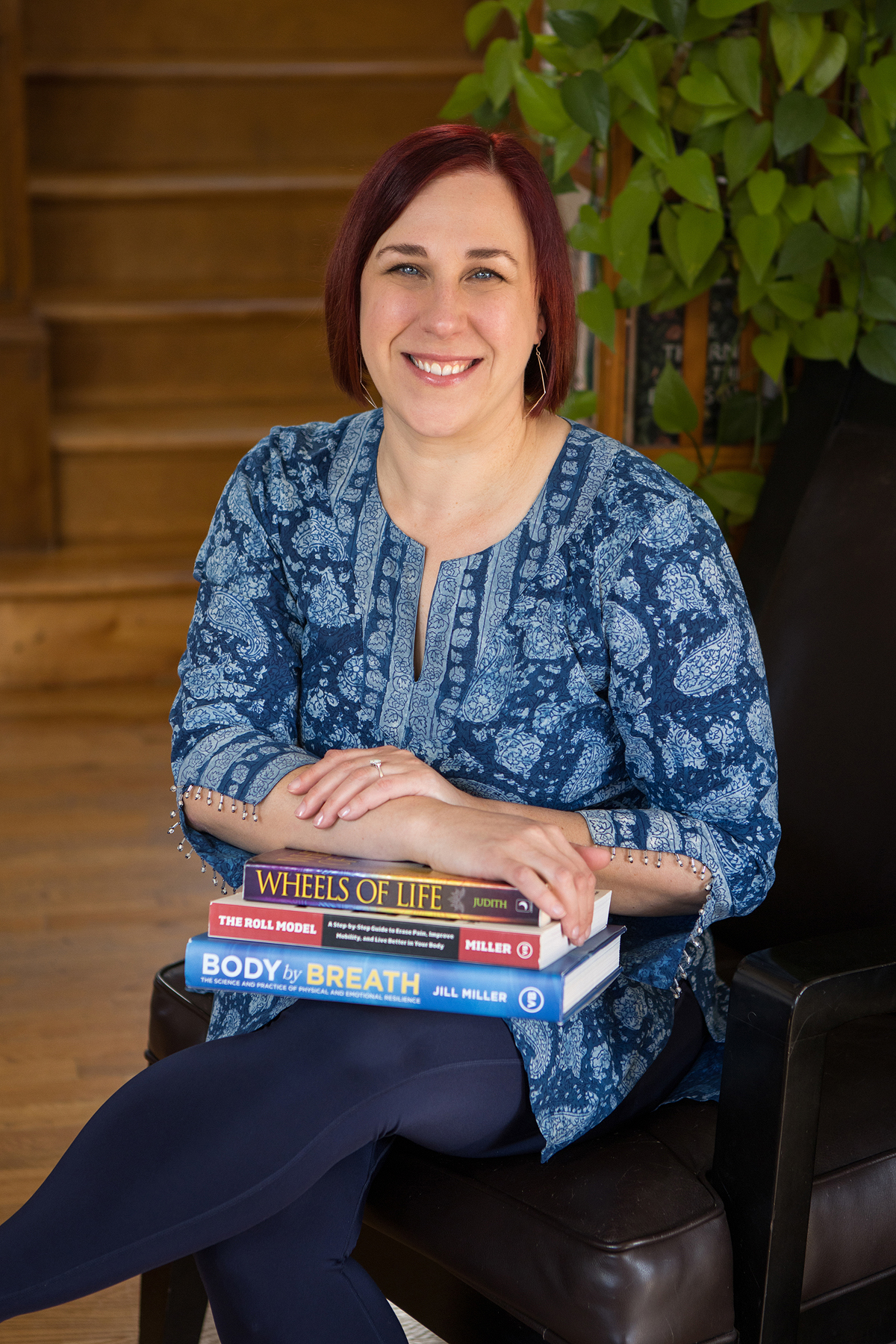
Ashley Vasas is a Minneapolis-based yoga teacher and the founder of Nourish & Grow Yoga. She has taught more than 1,000 hours of yoga classes, workshops, and special events and holds both 200-hour and 500-hour yoga certifications. Ashley specializes in accessible, nervous-system-supportive yoga that helps students build strength, mobility, and sustainable self-care practices.
She teaches online yoga classes as well as in-person classes in the Twin Cities.




