



Are Online Yoga Classes Worth It? The Truth About Practicing at Home
The Truth About Online Yoga

As a yoga teacher, I’m sometimes asked about doing yoga at home. The truth is, I started my yoga practice with online yoga!
There’s no denying that the studio experience is special: there are few distractions, a calming energy, and the fun of practicing with others. However, I cherish my home yoga practice and rely on it far more than I do on getting to the studio to take classes.
Today, there are more options for taking yoga classes from the comfort of your own home than there have ever been.
You can start a yoga practice at home with:
Online Yoga Videos
Livestream Yoga Classes
Fitness Apps
And all of these are great options if you’re time-pressed, introverted, or chronically late and struggle to make it to class on time. (The dread of walking in late…shudder…)
How Do Online Classes Work?
Let’s start with the basics. If you’re entirely new to yoga or have never taken an online class, here are some ways it’s different from using videos.
Getting Set Up
Online classes start at a designated time, with a real, live teacher. The classes are typically offered via a streaming service like Zoom, and to join them, you have to sign up in advance. It’s helpful to have your yoga mat and props set up and ready when class begins, so that you can jump right in.
The Class Experience
Many livestreamed yoga classes are hybrid, meaning the teacher may be in a studio teaching in-person students while also on camera. This means that the class will be a true reflection of the in-studio experience, just without the commute.
Because these classes are streamed live, they differ from polished, highly edited yoga videos you might find on YouTube or in an app. And that’s part of the fun. The teachers may flub a cue or sneeze, which is a good reminder that we’re all just human and that even a professional yoga teacher isn’t perfect (so you shouldn’t expect to be either).
Livestreamed yoga classes will also likely be as long as a typical studio class, so expect 60-minute or even 75-minute classes. Yoga videos, on the other hand, tend to be shorter and more focused on a specific body part or theme, rather than a full-body yoga session.
Ending Class
If the class is online only, the teacher may close the class as they would in an in-person session, or they may allow you to enjoy your rest in Savasana (a lying down, resting pose at the end of a practice) for as long as you’d like.
That’s also the beauty of an at-home practice: you can drift from the bliss of class right into a journaling practice, meditation, or anything else that supports your mental health and well-being. No need to hop in the car and go back to fighting traffic after your relaxing yoga practice!
Are Online Yoga Classes Worth It?
It’s easy to find free yoga videos, and many of them are great! So it’s normal to question whether paying for an online class is worthwhile.
Here’s why online classes are worth the cost of admission:
You’re learning from a real, credentialed, insured, professional yoga instructor.
You’re getting real-time feedback and alignment tips (you won’t get that from a video!).
You’re joining a community of like-minded people, even if you’re not in the same room.
Let’s dive into these a bit deeper.
Learning from a Professional Yoga Instructor
I’m not trying to knock anyone publishing videos online, but YouTube doesn’t require a Yoga Alliance certification before uploading a Vinyasa video.
When you take an online class, you can ensure that you’re learning from a credentialed yoga teacher or reputable yoga studio. Yoga teachers need a minimum of 200 hours of instruction to lead a class, and many yoga teachers have far more education under their belts than that. Look for a yoga teacher who holds an advanced certification, such as an RYT-500 or an Experienced Level cert, meaning they’ve taught more than 1,000 hours of yoga classes (literally).
Yoga teachers and studios are also required to be insured, which means they will be considerate in the cues they give and the postures they teach. A yoga video can teach you how to get into a headstand, but will it teach you how to get back down without hurting yourself? Or help you determine if headstand is even a safe posture for you to try in the first place?
Real-Time Feedback and Alignment Tips
While in-person classes (or, even better, private yoga sessions) are still the best option for getting alignment tips tailored for your specific body, even online classes can help you find the version of a posture that best serves you.
If your camera is on during a livestream class, your teacher can see your body and provide real-time tips and cues to help you have the best experience possible.
Because online classes are attended by anyone in any body, just like a studio class, a quality yoga teacher will demonstrate and cue several variations of a posture so that everyone can find a version that works for them. They will also include props, such as a chair or a wall, for balance. It’s just not something an 18-minute video can cover.
You’re Joining a Community
Even from your living room, when you attend a livestreamed yoga class, you’re being welcomed into a community.
The teacher may greet you by name and will undoubtedly be glad you’re there. Often, just like in the studio, there may be time for some small talk and greetings while you wait for everyone to arrive and get logged in.
And when you consistently come to the same class week after week, you’ll become part of the gang! You’ll get to know your fellow virtual yogis and will be missed when you’re not there. It can also make it feel less intimidating to attend in-person classes or workshops, because you’ll already “know” some of your fellow students.
How to Build Your At-Home Yoga Practice
As with any new habit, consistency is essential. Find online classes that you enjoy at times that work for your schedule; maybe that’s 10 AM for a mid-morning break, or perhaps it’s after the workday at 7 PM.
Pick your classes and commit to showing up!
Consistency is beneficial in a yoga practice for several reasons. One is that by taking the same yoga class or style every week, you can see your improvement more clearly. For example, if you take a Hatha class one week, a Vinyasa class the next week, and a Yin class the week after that, you may rarely find yourself in the same yoga posture. Without consistently working on the same poses and tempo, it’s hard to see how much you’ve grown.
Another reason for consistency is that by showing up to the same classes, you’ll feel more of a sense of community. You’ll see the same names and faces in class, and you’ll start to feel more at home in the group.
Finally, the benefits of the yoga practice depend on consistency. If you look at the most often touted benefits of yoga: improved mindfulness, better flexibility, and greater core strength, these usually fall by the wayside the moment you stop showing up on the mat.
We call yoga a practice because the transformation it promises is dependent on showing up day after day, week after week.
Create Your Yoga Space at Home
To further encourage consistency, it helps to have a designated yoga space. Not everyone has a spare room to set aside as a yoga studio, but if you have the space, it can be helpful to have your yoga mat rolled out and ready. Removing any obstacle to getting on the mat, no matter how small, can help you when you’re feeling unmotivated.
What makes an in-studio yoga class feel special is the atmosphere. Consider what helps you feel centered and relaxed, then bring those elements into the space where you practice. Scented candles or incense can help set the vibe. Selecting background music and soft lighting can create a relaxing ambiance for your home yoga practice.
The best advice is to make it your own, make it feel special, and make it a ritual. All of this will enhance relaxation and focus.
Ready to experience online yoga for yourself? Sign up for the First Month of Unlimited Yoga new student offer, explore the livestream schedule, and build a practice that fits your real life.
Frequently Asked Questions About Online Yoga
Are online yoga classes effective?
Yes. Online yoga classes can improve strength, flexibility, and mindfulness just like in-studio classes. Livestream classes also allow for real-time instruction and alignment cues from a qualified teacher.
Is online yoga worth paying for?
Paid online yoga classes provide structured sequencing, professional instruction, and real-time feedback that free videos often cannot. You’re also joining a community and receiving guidance from a credentialed instructor.
How do livestream yoga classes work?
Livestream yoga classes happen at a scheduled time using platforms like Zoom. You sign up in advance, join from home, and practice in real time with a teacher and other students.
Is online yoga good for beginners?
Yes, especially when the class is labeled beginner-friendly or gentle. A live instructor can offer modifications and answer questions, making it more supportive than random videos.
What do I need for online yoga at home?
At minimum, you need a yoga mat and enough space to move comfortably. Optional props like blocks, straps, blankets, or a chair can make your practice more accessible.
Online yoga vs studio yoga: what’s the difference?
Studio yoga offers in-person energy and fewer distractions. Online yoga offers convenience, flexibility, and the ability to practice consistently without commuting.
Is online yoga as good as in-person yoga?
Online yoga can be just as effective when taught live by a qualified instructor. While you miss the physical studio environment, you gain convenience and flexibility, which often improves long-term consistency.
About the Author
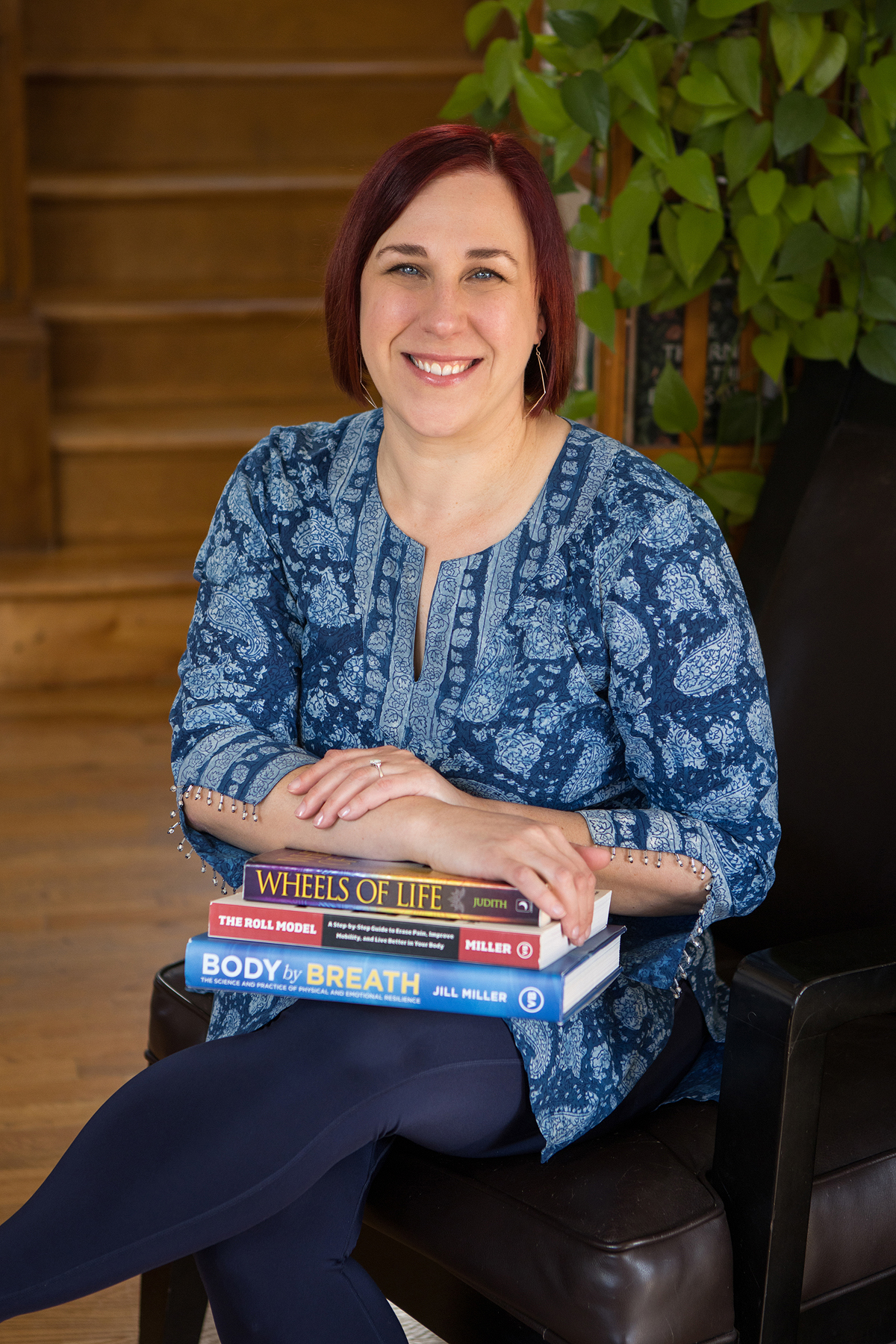
Ashley Vasas is a Minneapolis-based yoga teacher and the founder of Nourish & Grow Yoga. She has taught more than 1,000 hours of yoga classes, workshops, and special events and holds both 200-hour and 500-hour yoga certifications. Ashley specializes in accessible, nervous-system-supportive yoga that helps students build strength, mobility, and sustainable self-care practices.
She teaches online yoga classes as well as in-person classes in the Twin Cities.




